Product Portrait
Clutch servos
suitable for: DAF, Iveco, Mercedes-Benz, Renault, Scania, Volvo etc.
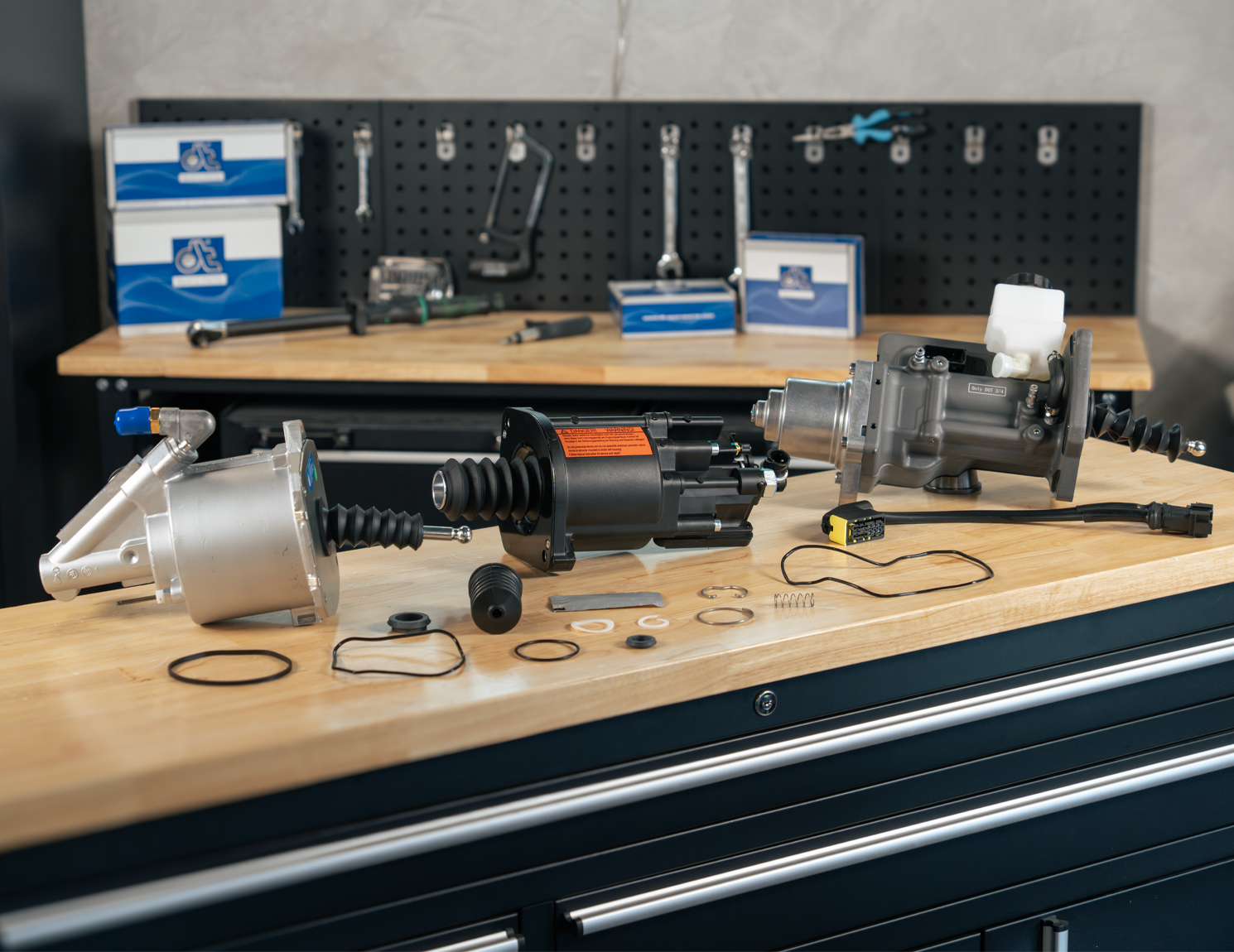
An animation clearly illustrates how the system transmits force: when the clutch pedal is pressed, the clutch master cylinder displaces the hydraulic fluid, which is fed via a pipe to the clutch servo. There, the hydraulic pressure initially acts directly on the actuator piston. At the same time, the hydraulic pressure inside the clutch servo moves another piston, which opens a valve and allows compressed air to flow into the pneumatic working chamber.
The combined effect of the hydraulic pressure and the additional pneumatic pressure acting on a larger piston surface results in a significantly increased actuating force. During the clutch engagement process, this force is transmitted evenly to the release mechanism via the piston rod, thereby assisting in the separation of the clutch.
“In the workshop, clutch-related problems often manifest themselves as a change in pedal feel, vibrations or a sub-optimal shift point,” explains Lars. The most common causes include faults in the compressed air supply, problems with the hydraulic fluid, missed maintenance intervals or contamination in the system. For efficient problem-solving, the Parts Specialists recommend a structured procedure in which a diagnosis is first carried out and the actual values analysed before further measures are taken. Often, initial indications of possible sources of faults can be identified simply by carrying out targeted checks on components such as hoses, seals or the release fork.
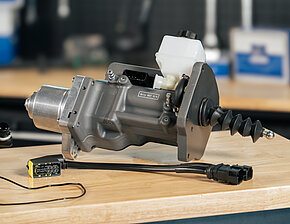
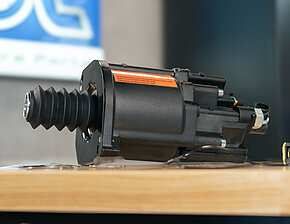
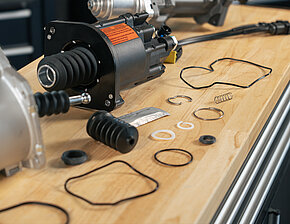

“There are also important points to bear in mind during installation and commissioning to ensure the system works properly. After replacement, the system must be ventilated properly to ensure there is no air in the hydraulic circuit; the vehicle parameters should then be checked and, if necessary, reset, and the code fault memory cleared,” says Lars. A test drive helps to check the gear-changing behaviour and detect any potential leaks at an early stage. It should also be noted that the clutch must be re-calibrated after installation so that the system resets the wear correctly.
Another important factor is the hydraulic fluid used, as it attracts water. A small amount is unavoidable for technical reasons, but it should not exceed around three per cent; otherwise, it will need to be replaced. Furthermore, care must be taken when handling brake fluid, as it can damage paintwork.
If you have any technical questions about Diesel Technic products and services, our Parts Specialists are happy to help via their HelpDesk and offer the right support: helpdesk.parts-specialists.com.
The Parts Specialists are now also available in the “PS App”. There you can send enquiries directly to our team of experts – quickly and easily with your smartphone in your pocket.