Product Portrait
4-circuit protection valves
suitable for: DAF, Iveco, Mercedes-Benz, Renault, Volvo etc.
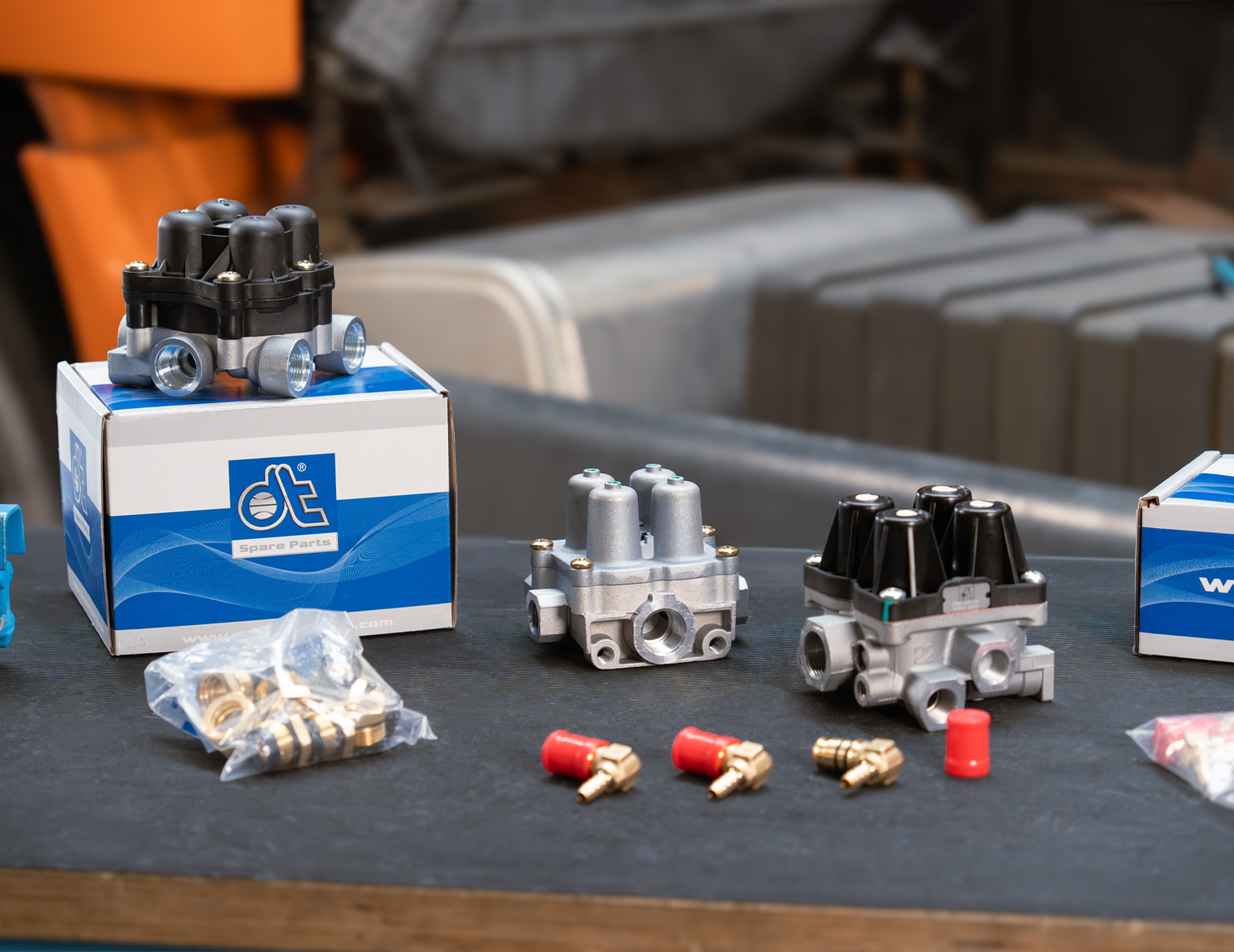
The compressed air generated by the compressor and treated by the air dryer is distributed to several circuits via the valve. The individual valves are numbered and assigned to their respective operating circuits. Each circuit has its own shut-off function. If, for example, a pipe bursts and the compressor is unable to compensate for the loss of pressure, the remaining circuits shut off automatically at a defined limit pressure.
Furthermore, in most versions, the 4-circuit safety valve ensures that, when the system is pressurised, the brake circuits are supplied with compressed air first. This means that the necessary braking power is available before it is even possible to release the parking brake or supply the auxiliary consumers. “Some versions also feature a so-called ‘bleed-back’ function. If, for example, the pressure in a circuit drops completely, this function enables controlled deceleration by allowing the parking brake to bring the vehicle to a standstill with increasing braking force,” says Niklas.
A good understanding of how the system works is crucial for a successful diagnosis. “When troubleshooting, it is important to know exactly how the 4-circuit protection valve works and is constructed,” explains the Parts Specialist. In addition, reference numbers, pressure diagrams and connection designations should always be checked carefully.
As part of the Diesel Technic Quality System (DTQS), 4-circuit protection valves are tested on specialised test benches. Various operating conditions and pressure profiles are simulated in order to assess the behaviour of the valves under different conditions. This enables any discrepancies to be identified at an early stage and ensures reliable operation.
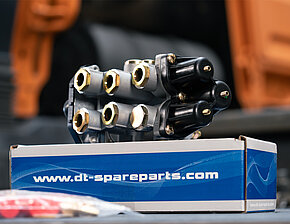
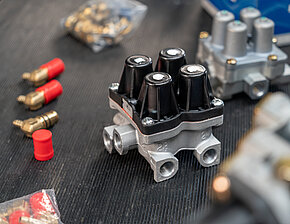
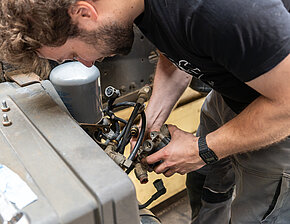
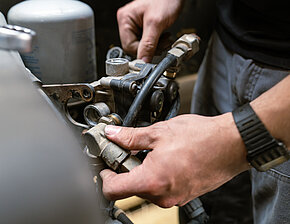
A typical indicator of a defect is the uncontrolled release of air despite the system being under operating pressure. This can be caused by a valve that has become stuck, which is often due to contaminants in the system. Whilst investigating such a defect, Niklas identified some residues at the pressure inlet. These can arise, for example, from compressor wear or contaminants from the intake tract. “That is why you should always check whether the compressor is introducing oil or dirt into the system and whether the maintenance intervals for the injection tract have been adhered to,” emphasises Niklas.
To get a precise diagnosis, it is worth first checking the pressure display in the vehicle. If the minimum pressure is maintained either upstream or downstream of the 4-circuit safety valve despite a detected leak, this initially suggests that the valve is functioning correctly. If, on the other hand, the displayed pressure drops completely to zero, this may indicate a fault with the 4-circuit protection valve. “It is important always to interpret the pressure readings correctly and systematically identify the cause,” explains Parts Specialist Niklas.
Not every 4-circuit protection valve needs to be completely replaced in the event of a defect. DT Spare Parts offers suitable repair kits for numerous applications. Special care is required here, though: the individual valves are preset to defined opening and cut-off pressures via adjusting screws. When carrying out repairs, the manufacturer’s specifications therefore need to be followed precisely. In addition, you should check whether the pressure sensors, which display the pressure readings on the dashboard, are working correctly. This is the only way to ensure that the entire compressed air system functions reliably.
If you have any technical questions about Diesel Technic products and services, our Parts Specialists are happy to help via their HelpDesk and offer the right support: helpdesk.parts-specialists.com.
The Parts Specialists are now also available in the PS App. There you can send enquiries directly to our team of experts – quickly and easily with your smartphone in your pocket.