Product Portrait
Turbocharger
suitable for: DAF, Isuzu, Iveco, MAN, Mercedes-Benz, Scania, Volvo etc.
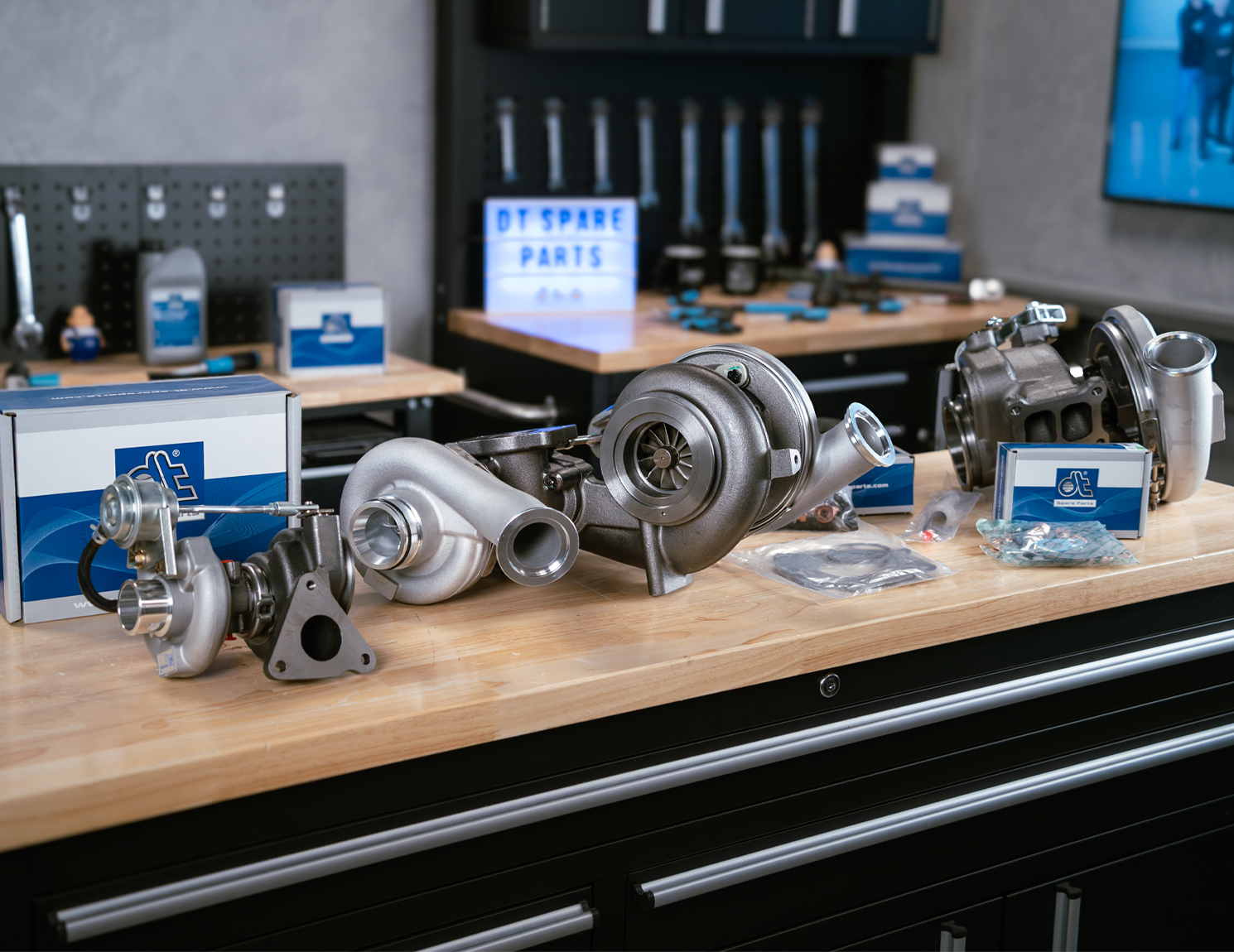
“In the commercial vehicle sector, robust diesel engines with high compression and low rated speeds are predominantly used,” explains Kevin. Due to these engine characteristics, they benefit particularly strongly from turbocharging, as this allows the required power to be provided in the upper load spectrum despite limited speed intervals.
The turbocharger consists of two central areas: the exhaust side and the compressor side. On the exhaust side, the hot engine exhaust gases power the turbine wheel, which is connected to the compressor wheel via a shaft. On the compressor side, fresh air is sucked in, compressed and then led into the engine. During operation, the turbocharger reaches speeds of over 100,000 rpm with a boost pressure of between 1 and 2 bar. Parts Specialist Kevin adds an important reminder: “A wastegate regulates the excess exhaust gas flow to prevent overload. The wastegate housing is preset at the factory and should not be modified!”
Since turbochargers are exposed to high thermal and mechanical loads, correct lubrication is essential. In the PS Tips video, Parts Specialist Kevin uses a dismantled turbocharger to demonstrate typical signs of insufficient lubrication, such as discolouration or scratch marks on the turbine shaft. “To prevent this, the turbocharger must be pre-lubricated before installation and the shaft must be rotated several times so that the oil is distributed evenly,” explains the Parts Specialist. The QR code on the product label can be used to access the relevant installation instructions directly in the Partner Portal.
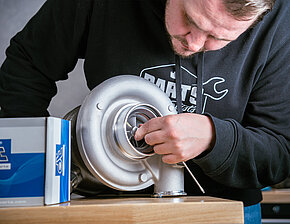
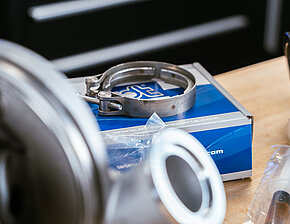
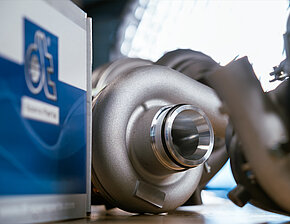
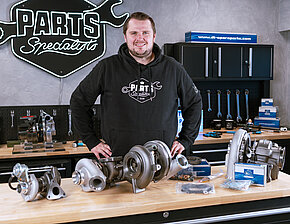
Other typical error patterns have already been presented in an earlier PS Tips video on the subject of turbochargers. Various symptoms can indicate a defect, including grinding noises, blue or black exhaust smoke, a noticeable drop in performance or oil in the charge air system. “If any of these signs occur, the turbocharger should be checked immediately to prevent further damage,” explains Kevin. To avoid such problems, it is essential to follow the regular maintenance intervals – especially for oil changes – as a clean and sufficient oil supply has a significant impact on the service life of the turbocharger.
If you have any technical questions about Diesel Technic products and services, our Parts Specialists are happy to help via their HelpDesk and offer the right support: helpdesk.parts-specialists.com.
The Parts Specialists are now also available in the ‘PS App’. There you can send enquiries directly to our team of experts – quickly and easily with your smartphone in your pocket.