Product Portrait
Solenoid valves
suitable for: DAF, Iveco, MAN, Mercedes-Benz, Scania, Volvo etc.
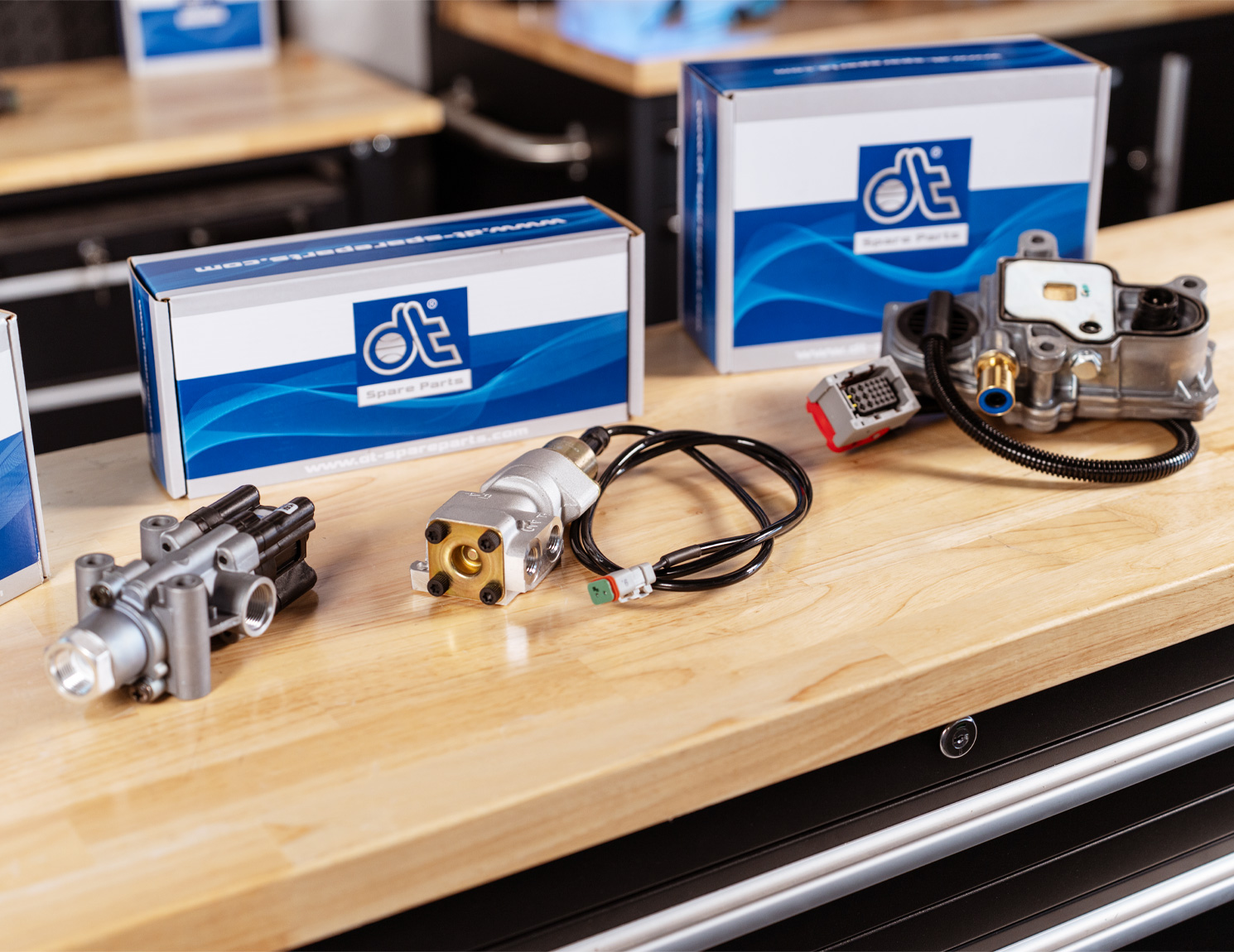
Using an example from the air supply system, Rolf explains the basic structure of a solenoid valve. The most important components include the connector, coil, armature and valve. When no voltage is applied, a spring presses the armature against the valve, keeping the flow closed. When voltage is applied, the coil generates a magnetic field that attracts the armature and opens the flow.
When testing solenoid valves, care should always be taken to ensure the correct supply voltage is used. Depending on the application, different voltages – such as 12 or 24 volts – are used. The most common causes of defects include short circuits, contact problems and contamination. Burnt pins on the connector plug may, for example, indicate a short circuit. “In this case, it is advisable to replace not only the solenoid valve itself, as well as the connector. Contamination can also impair the functioning of solenoid valves,” says Rolf. Some models feature integrated strainers that trap dirt particles.
For a systematic diagnosis, Rolf recommends first checking the relevant safety fuse and the power supply using the circuit diagram. Next, you should check whether voltage is present directly at the component. “A test lamp can also be used to detect mass faults and contact resistance,” explains the Parts Specialist. Finally, the resistance of the coil should be measured in accordance with the manufacturer’s specifications.
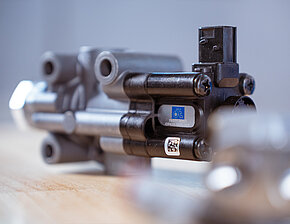
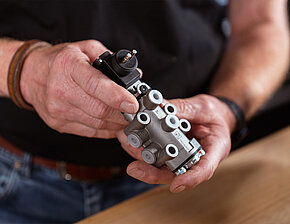
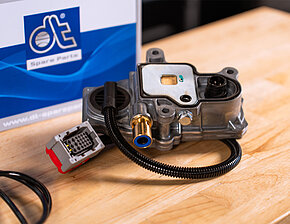
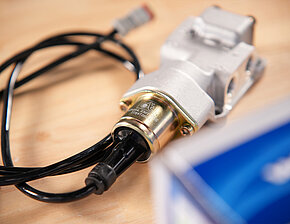
“When installing, it is particularly important to select the correct solenoid valve using the reference number. Components that look identical on the outside may have different technical specifications and are therefore not interchangeable,” emphasises Rolf. In addition, attention should be paid to ensuring the connectors are connected correctly to avoid incorrect operation.
For technical questions about Diesel Technic’s products and services, the Parts Specialists are available with a variety of support options. As well as Dieter, the AI chatbot, who is available round the clock via the Partner Portal and on WhatsApp on +49 4273 89 4444, the HelpDesk also offers support for technical enquiries: helpdesk.parts-specialists.com. Furthermore, enquiries can be submitted quickly and easily directly to the Parts Specialists via the PS App.