Product Portrait
Shock absorbers
suitable for: DAF, Ford, Iveco, MAN, Mercedes-Benz, Renault, Scania, Volvo, VW etc.
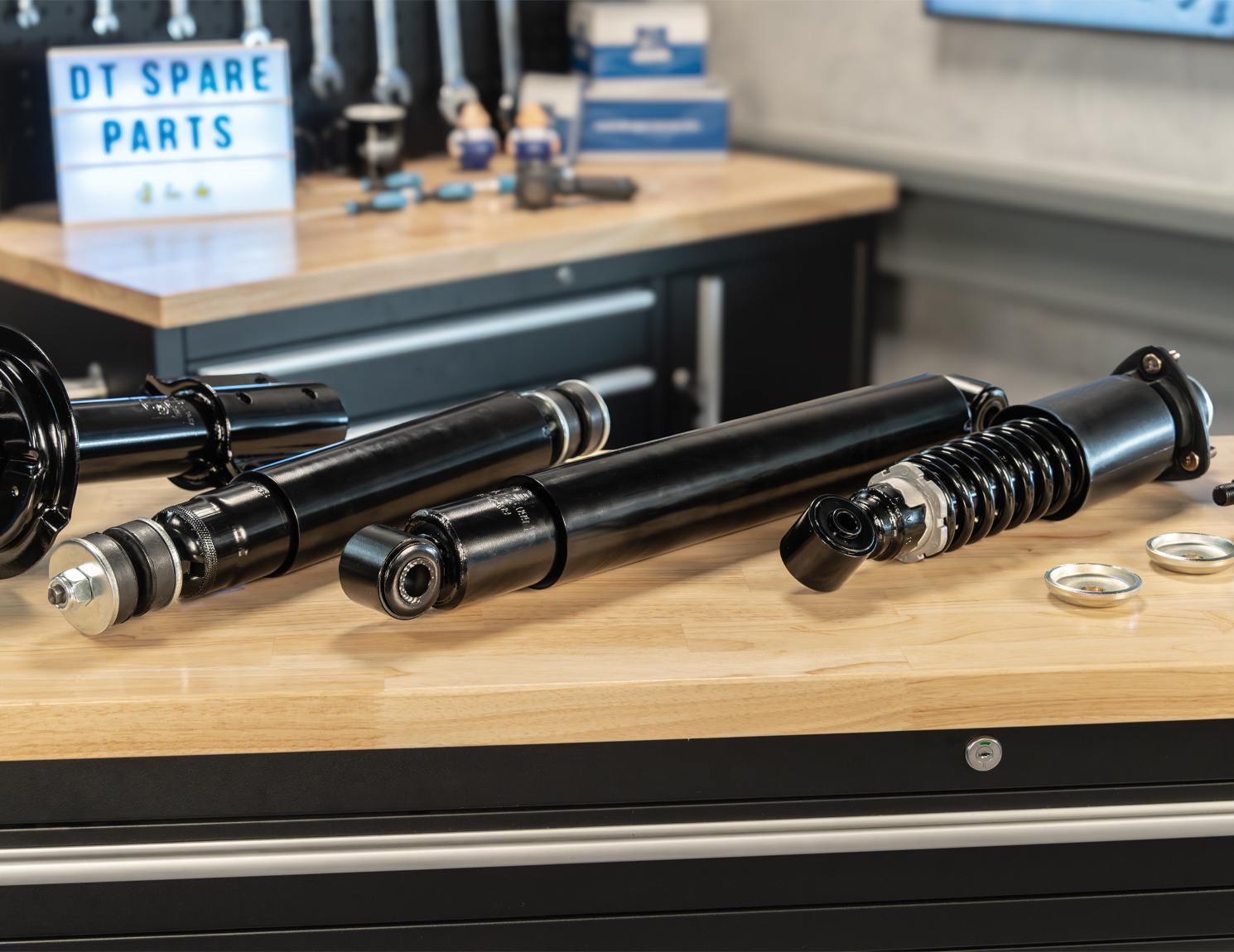
To ensure consistently high quality, the shock absorbers are tested on the company's own test bench at the group headquarters in Kirchdorf. This guarantees that all components meet the high standards required for everyday use in commercial vehicles. As a result, the DT Spare Parts brand offers a 24-month warranty on its products.
At the start of the PS Tips video, Lars demonstrates the internal structure of a twin-tube shock absorber. The shock absorber features a central working chamber, an outer compensation chamber, and a lamellar valve attached to the piston rod, which also separates the upper and lower working chambers. As the shock absorber extends and compresses, the oil is distributed between the upper and lower chambers of the working space via the lamellar valve. The lamellar valve reduces the oil speed, thereby reducing the speed of the rod. The excess oil present in the working chamber during retraction is conveyed into the compensation chamber via a bottom valve. Lars points out, “that a shock absorber must be installed in the correct orientation, as otherwise the internal mechanism’s function will be limited.”
Typical indications of a defect include a spongy ride, knocks on the chassis, erratic steering, or visual signs such as increased tyre wear or oil leakage from the shock absorber. But the most common cause of defects is consistently poor road conditions, which can lead to thermal overload and consequently damage to the internal components,” explains the Parts Specialist. To prevent such problems, it is important to select the right shock absorber, as well as ensuring the correct suspension settings and a tension-free installation. The protective tube should also be checked regularly for defects.
Lars has some further important advice regarding installation: When replacing a shock absorber, it is always advisable to check adjacent components such as axle parts and attachments as well. “On vehicles with air suspension, the suspension must be calibrated to ensure the shock absorber functions fully,” explains Lars. Self-locking nuts must be replaced during every repair. Furthermore, the nuts must only be tightened to the correct torque when the vehicle is at driving level, otherwise this can lead to accelerated wear.
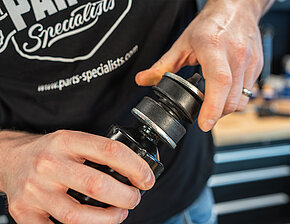
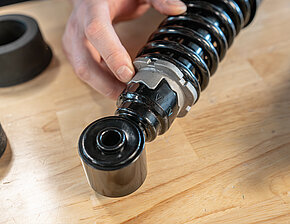
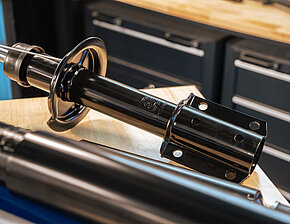
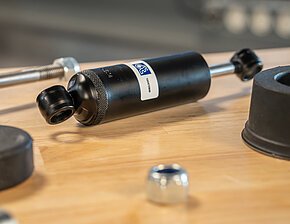
Shock absorbers are usually delivered lying flat. If the oil has dispersed as a result and the back pressure appears to be missing when unpacking, the Parts Specialist recommends positioning the shock absorber upright and operating it several times to restore the full damping pressure.
If you have any technical questions about Diesel Technic products and services, our Parts Specialists are happy to help via their HelpDesk and offer the right support: helpdesk.parts-specialists.com.
The Parts Specialists are now also available in the “PS App”. There you can send enquiries directly to our team of experts – quickly and easily with your smartphone in your pocket.